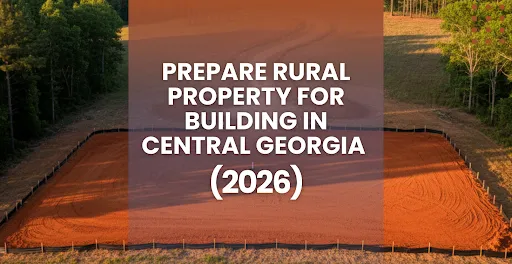
How to Prepare Rural Property for Building in Central Georgia
Preparing Rural Property for Building in Central Georgia
Preparing rural property for building in Central Georgia is the first and most important step in any successful construction project. Whether you’re planning a home, barn, or small commercial structure, proper site preparation for construction ensures safety, compliance, long-term stability, and cost control.
Rural land often comes with unique challenges—dense vegetation, uneven terrain, limited access, and undeveloped utilities. Without a clear plan for construction land preparation, these issues can lead to delays, unexpected expenses, and structural problems down the road.
This guide walks through the step-by-step process for preparing land for building, using a practical Georgia land development checklist tailored to rural properties in Central Georgia.
Step 1: Assess the Land and Define Building Goals
Every successful rural build starts with a thorough land assessment. Before any clearing or equipment is brought in, evaluate the property to understand its natural features and limitations.
What to Review During Land Assessment
Property boundaries and recorded surveys
Soil type, slope, and drainage patterns
Low-lying or flood-prone areas
Tree density, brush thickness, and visible stumps
Access points for driveways and construction equipment
Easements, setbacks, and local restrictions
This step helps define the scope of work for raw land site prep in Georgia and prevents costly changes later in the build process.
Step 2: Secure Permits and Local Approvals
Permitting is a critical part of rural land development in Georgia and is often overlooked early on. Counties in Central Georgia may require approvals for:
Tree removal or timber activity
Erosion and sediment control
Septic system installation
Well drilling or water connections
Starting land preparation without proper permits can result in fines, work stoppages, or required rework. A structured permitting plan keeps your project compliant and moving forward.
Step 3: Land Clearing for Building
Once planning and permits are in place, land clearing for building begins. Clearing creates a safe, accessible workspace for grading, utilities, and construction.

Common Land Clearing Methods
Selective clearing: Removes unwanted vegetation while preserving mature trees
Full clearing: Removes all trees, brush, and stumps for large or commercial builds
Forestry mulching: Grinds vegetation into mulch, leaving protective ground cover
Forestry mulching is commonly used in site preparation in Central Georgia because it minimizes soil disturbance and helps control erosion.
Land clearing establishes the foundation for all future development and reduces safety hazards during construction.
Step 4: Grading and Soil Stabilization
Grading is a core component of site preparation for construction on rural land. Proper grading directs water away from structures and creates a stable building surface.
Key Grading Activities
Removing remaining debris and rocks
Leveling slopes and correcting low spots
Compacting soil to prevent settling
Adding fill dirt or gravel where needed
In Central Georgia, where clay-heavy soil is common, proper compaction and drainage planning are essential for long-term foundation stability.
Step 5: Utility Planning and Installation
Utilities should be planned before construction begins, not after.
Utilities to Plan For
Water (well or municipal connection)
Septic system placement and testing
Electrical service and conduit paths
Internet, gas, or additional services
Driveway access for heavy equipment
Early coordination prevents delays and supports efficient preparation of land for building.
Step 6: Erosion Control and Soil Protection
After clearing and grading, exposed soil is vulnerable to erosion—especially in Central Georgia’s rainfall patterns.
Common Erosion Control Measures
Silt fencing or erosion mats
Mulch or straw ground cover
Retaining walls on slopes
Forestry mulching naturally supports erosion control by leaving organic mulch on the soil surface.
Step 7: Final Site Preparation and Inspection
Before construction starts, conduct a final walkthrough to ensure the property is truly build-ready.
Final Site Prep Checklist
Property boundaries clearly marked
Drainage flowing away from build site
Utilities installed and inspected
Remaining hazards removed
This step confirms that construction land preparation is complete and compliant.
Step 8: Optional Enhancements Before Building
Many property owners choose to add improvements before construction begins:
Gravel or compacted driveways
Clearing for landscaping or recreation
Temporary fencing
Ongoing brush or wildlife management
These enhancements improve access and reduce disruptions during the build phase.

Common Challenges in Rural Land Development in Georgia
Dense vegetation or heavy brush
→ Use selective clearing or forestry mulching
Uneven terrain or clay soil
→ Proper grading, compaction, and fill
Permitting delays
→ Follow a structured Georgia land development checklist
Unexpected stumps or debris
→ Plan contingencies during site prep
Best Practices for Developing Land for Residential Use
Start with a detailed site evaluation
Plan drainage and access early
Hire experienced land clearing professionals
Combine mulching and selective clearing when appropriate
Coordinate utilities before construction begins
These best practices make building on rural land in Georgia more predictable and cost-effective. Vaquero Landworks specializes in helping property owners navigate each phase of rural development with professional land clearing and site preparation services.
Conclusion
Preparing rural property for building in Central Georgia requires careful planning, proper permitting, land clearing, grading, utility coordination, and erosion control. Following a structured approach reduces delays, controls costs, and ensures long-term stability for your build.
For professional site preparation in Central Georgia, working with an experienced land clearing and site prep team is essential.
Connect with Vaquero Landworks to transform your rural property into a safe, build-ready site with confidence.
Frequently Asked Questions
How does seasonal weather affect site preparation in Central Georgia?
Rain can delay grading and compaction, while drier periods improve equipment access and efficiency.
Can forestry mulching be combined with traditional clearing?
Yes. Many projects use mulching for brush and selective trees, and traditional clearing for heavy timber.
Does proper land clearing reduce long-term maintenance?
Yes. Proper clearing improves drainage, reduces erosion, and limits invasive growth.
Why is soil testing important for rural land development?
Soil testing helps determine suitability for foundations, septic systems, and drainage.
How do access roads affect raw land site prep in Georgia?
Well-planned access roads support equipment movement and prevent delays during construction.
